Northern Virginia Housing Market Shows Early Signs of Rebalancing as Inventory Growth Outpaces Nation
Faster Supply Gains Locally Lead to Slight Price Easing While National Prices Continue to Rise
FAIRFAX, Va. (February 20, 2026) The housing market in Northern Virginia is showing early signs of adjustment. Inventory is rising, prices are beginning to ease slightly, and homes are taking longer to sell — trends that are more pronounced than those seen nationally, according to the Northern Virginia Association of Realtors® (NVAR).
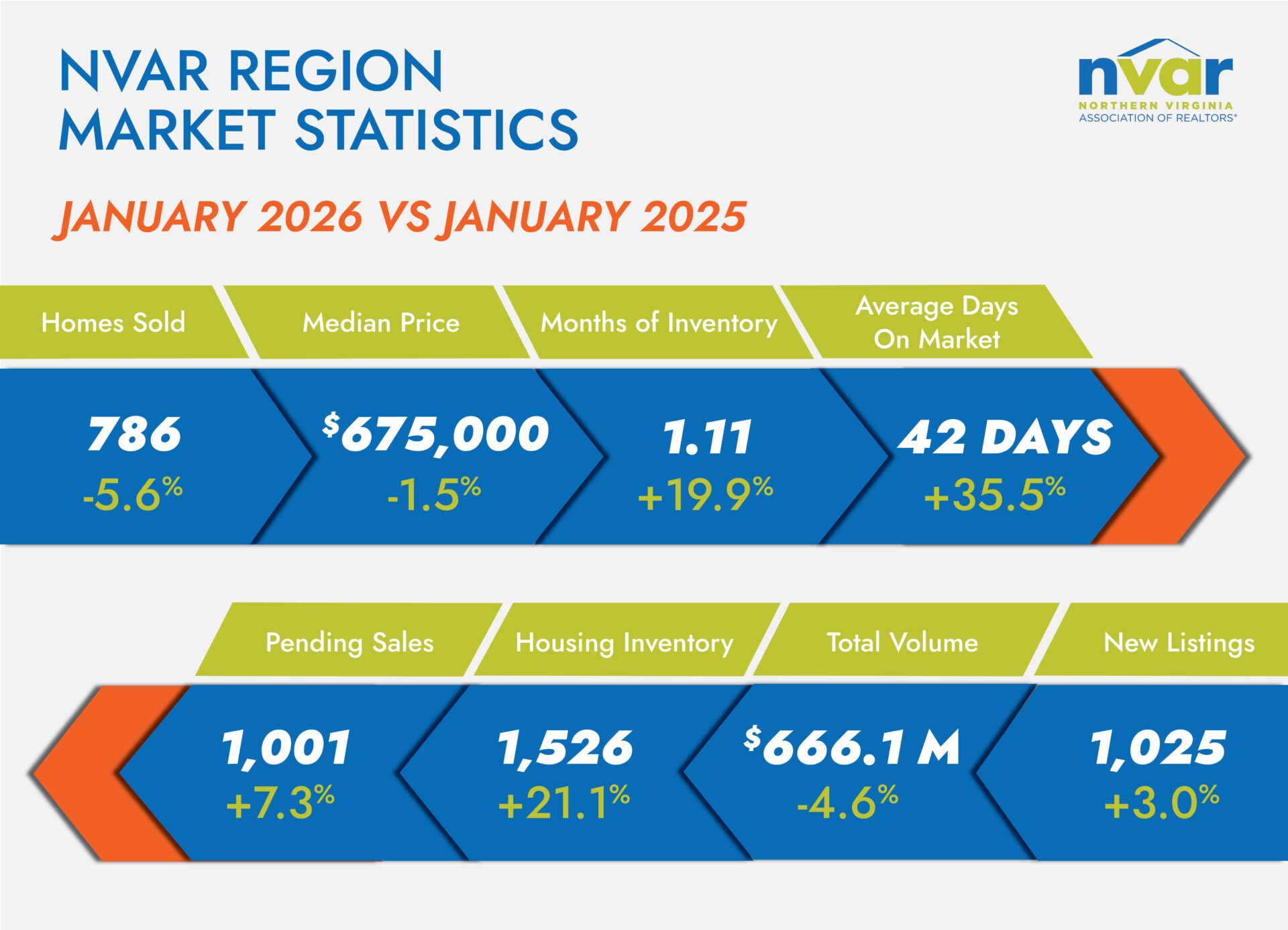
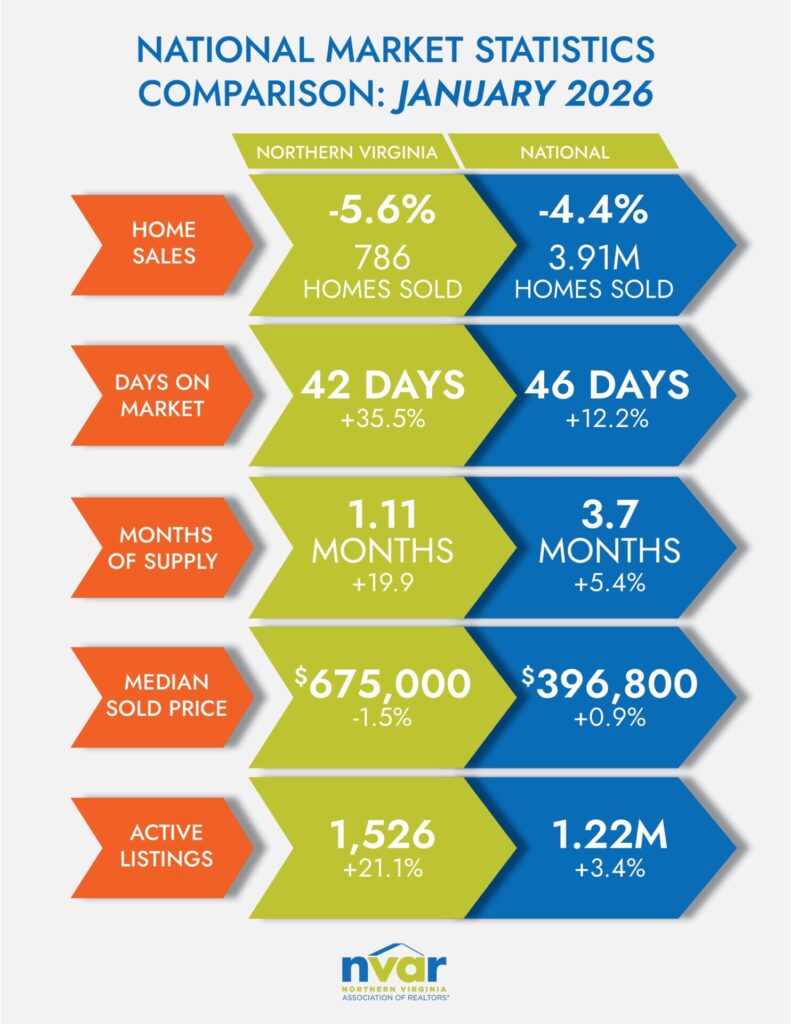
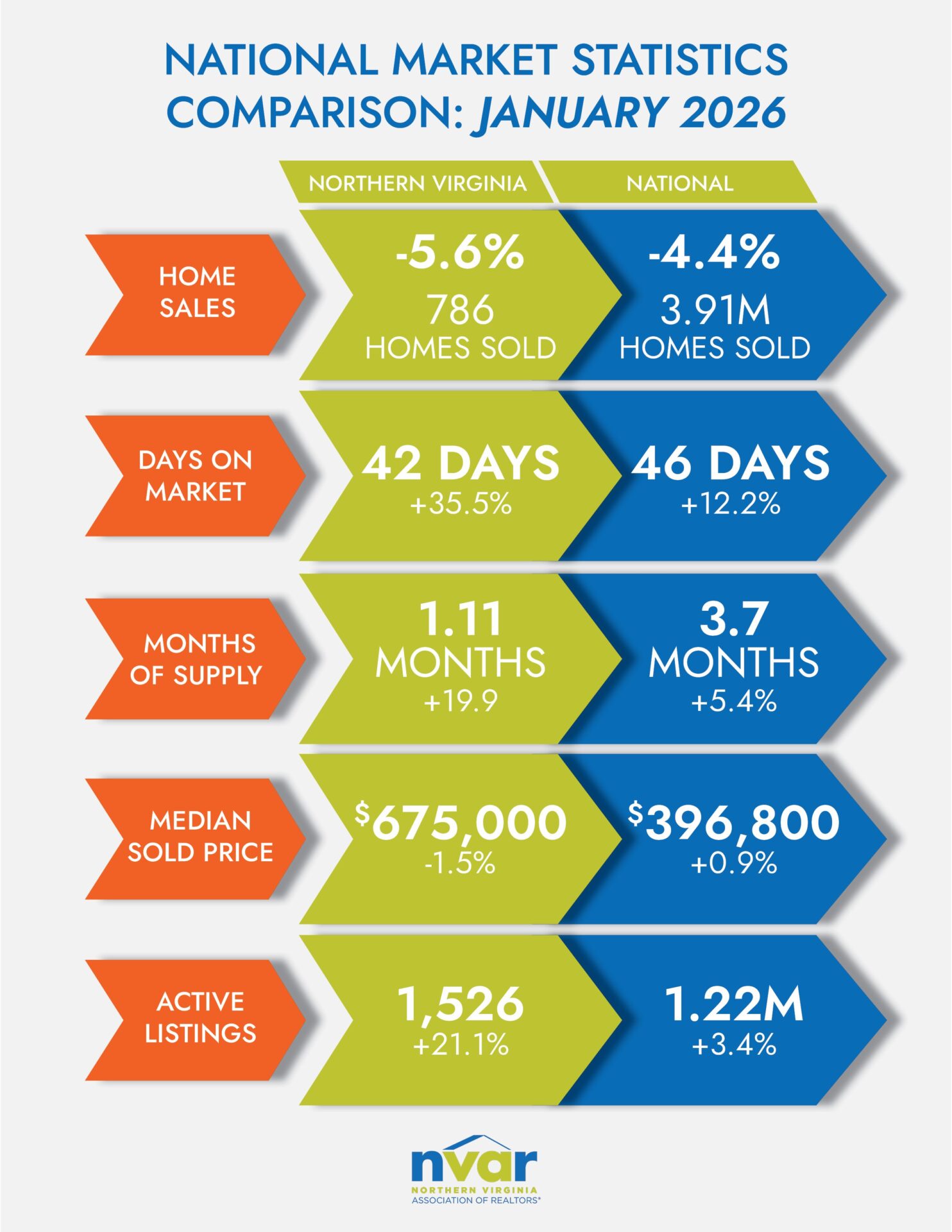
In Northern Virginia, 786 homes closed in January 2026, a 5.6% decrease compared to January 2025. Nationally, existing home sales totaled 3.91 million, down 4.4% year over year. While both markets experienced slower sales activity, Northern Virginia’s slightly sharper decline suggests that higher price points locally may be making buyers more sensitive to affordability pressures, including mortgage rates and overall housing costs.
The median sold price in Northern Virginia was $675,000 in January 2026, down 1.5% from one year ago. In contrast, the national median price increased 0.9% to $396,800. The modest local price softening reflects the impact of rising inventory, which is beginning to relieve some of the upward pressure seen in recent years. Nationally, where inventory growth has been more limited, prices continue to edge upward. Despite the recent dip, Northern Virginia home values remain substantially higher than the national median, underscoring the region’s strong demand and economic fundamentals.
“The moderation we’re seeing in Northern Virginia prices reflects one key factor — inventory growth,” said NVAR CEO Ryan McLaughlin. “When supply expands, price pressure naturally stabilizes. That’s a sign of a market moving toward healthier balance.”
Homes in Northern Virginia averaged 42 days on market in January, a 35.5% increase compared to January 2025. Nationally, homes averaged 46 days on market, a 12.2% increase year over year. Although homes are still selling slightly faster locally than they are nationally, the pace of change is much more pronounced in Northern Virginia. It is also important to note that a significant winter storm in January likely disrupted showings and delayed buyer activity for a period of time, temporarily extending marketing timelines for many listings. Weather-related interruptions, including school and federal office closures across the region, may have compounded this effect by limiting both in-person tours and decision-making momentum. The significant rise in days on market indicates that buyers now have more time to evaluate options and negotiate, a marked shift from the highly competitive conditions of the past several years.
Inventory in Northern Virginia climbed to 1,526 active listings in January 2026, a 21.1% increase compared to one year ago. National inventory rose 3.4% to 1.22 million units. The regional inventory surge — more than six times the national growth rate — is the clearest indicator that supply constraints in Northern Virginia may be easing. Notably, much of this inventory growth is concentrated in the condominium market, which accounts for 725 active listings. By comparison, there were 579 single-family homes and 222 townhomes available, underscoring that attached housing represents the largest share of current supply. This expansion is providing buyers with greater choice and could contribute to more measured price growth in the months ahead.
Months of supply in Northern Virginia reached 1.11 months in January 2026, up 19.9% from January 2025. Nationally, months of supply declined 5.4% to 3.7 months. Even with notable local improvement, Northern Virginia remains significantly undersupplied compared to national conditions and well below the four- to six-month range typically considered balanced. The figures reinforce that while short-term adjustments are underway, the region continues to face a structural supply deficit that affects long-term affordability.
“Northern Virginia is clearly transitioning,” McLaughlin added. “We’re seeing meaningful inventory gains and a shift toward more balanced conditions, but at just over one month of supply, we are still far from equilibrium. Sustained efforts to expand housing supply remain essential to long-term affordability and market stability.”
Taken together, the January numbers tell a consistent story: both the regional and national housing markets are experiencing slower sales, but Northern Virginia’s sharper inventory growth is driving earlier signs of price moderation and buyer leverage. As 2026 progresses, continued supply expansion will determine whether the region moves closer to lasting balance.
Background
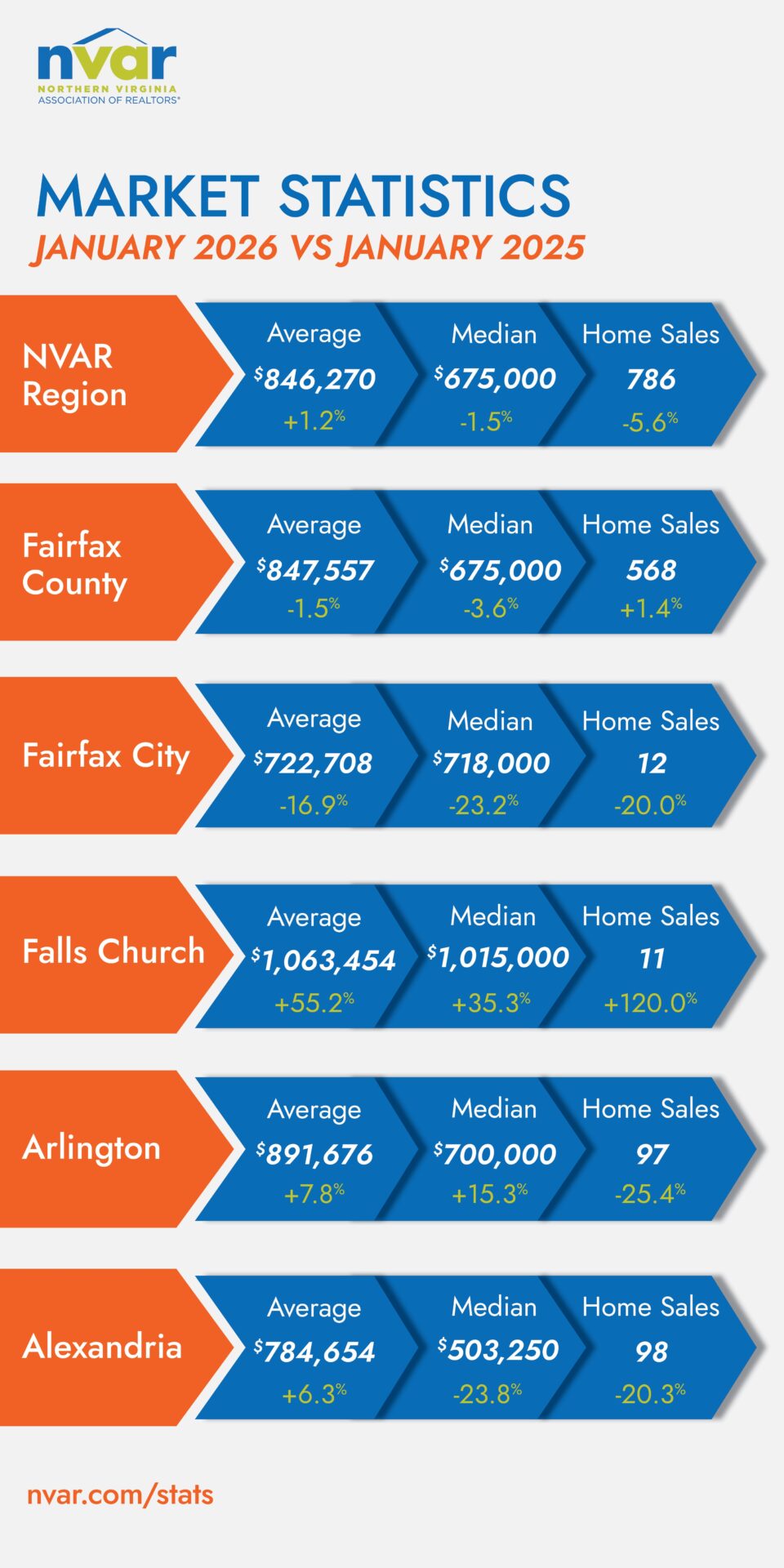
The Northern Virginia Association of Realtors® reports on home sales activity for Fairfax and Arlington counties, the cities of Alexandria, Fairfax, and Falls Church and the towns of Vienna, Herndon, and Clifton. Below are January 2026 regional home sales compared to January 2025 for Northern Virginia, with data derived from Bright MLS as of February 9, 2026 (total sales and listings may not include garage/parking spaces):
- The number of closed sales in January 2026 was 786 units. This was a 5.6% decrease compared to January 2025.
- The volume sold in January 2026 was $666,125,607. This was a 4.6% decrease compared to January 2025.
- The median sold price in January 2026 was $675,000. This was down 1.5% compared to January 2025.
- The average days on market was 42 days in January 2026. This was up 35.5% compared to January 2025.
- The number of new pending sales in January 2026 was 1,001 units. This was up 7.3% compared to January 2025.
- The number of active listings in January 2026 was 1,526 units. This number was up 21.1% compared to January 2025.
- The months of supply of inventory in January 2026 was 1.1. This was up 19.9% compared to January 2025.
NVAR Charts, Graphs, Social Media for January 2026 NVAR Housing Stats
January National Comparison: Click here.
January Housing Data: Click here.
Regional Jurisdiction Infographic: Click here.
NVAR Region Infographic: Click here.
2026 Regional Housing Market Forecast: Click here.
These links are accessible from the Market Stats page here: Click here.
About NVAR
The Northern Virginia Association of Realtors® (NVAR) serves as the voice of real estate in the Greater Northern Virginia Region. NVAR is dedicated to enhancing Realtor® success by delivering exceptional value, driving innovation, and impacting the industry. Headquartered in Fairfax, Virginia, with a new Member Experience Center located in Loudoun County, NVAR supports its 13,000 members with essential resources, including industry education, advocacy, networking, and professional development opportunities. The Association is committed to promoting ethical practices and excellence in real estate. It advocates on behalf of homebuyers, sellers, renters, and commercial tenants who are directly affected by local, state, and federal policy decisions impacting affordability, property rights, and quality of life. NVAR strives to elevate the standards of the real estate industry and to contribute to the overall growth and prosperity of the Washington DC Metropolitan Area and beyond. nvar.com.
Follow us on X: @nvar
Visit us on Facebook: facebook.com/nvar.realestate
Join us on LinkedIn: NVAR
Follow us on Instagram: nvarofficial


.jpg?sfvrsn=e2c3720c_1)